
'There is a change in the administration in the United States of America. They are bound to further pressurise India to sign the CTBT. In such an event it was necessary to make such a statement or speak the truth on the issue so that India does not rush into signing the CTBT.'

India on Thursday successfully test-fired its indigenously developed nuclear capable Prithvi-II surface-to-surface missile with a strike range of 350 km as part of a user trial by the army from a test range at Chandipur in Odisha.

India successfully test-fired its indigenously developed nuclear capable sub-sonic cruise missile 'Nirbhay', which can strike targets more than 700 kms away, from a test range at Chandipur near Balasore in Odisha on Friday.

While The Australian and The Sydney Morning Herald said two Indian spies were booted out, the Australian Broadcasting Corporation did not mention any number.
The missile, weighing 650kg, can carry a 50kg payload over a distance of 25km.

Python-5 missile live firing was conducted to validate target engagement from all aspects as well as beyond visual ranges. In all the live firings, missile hit the aerial target.

The missile successfully flew in its pre-set trajectory meeting its mission objectives
A message board on the successful launch of Agni-III
The supersonic anti-ship cruise missile was jointly developed by India and Russia.

Defence Research and Development Organisation plans to make the country "missile import free" by 2022, the agency has told the Prime Minister's Office.

India is marching towards becoming the fourth country in the world to have space docking technology.

Out of its 47 operational satellites, India currently has six to eight satellites which are used entirely for military purposes.

The missile has a strike range of 2000 km, the sources said soon after it blasted off from a mobile launcher at the Launch Complex-4 of the Integrated Test Range, the sources said.
India on Friday successfully test-fired its indigenously developed sub-sonic long range cruise missile, 'Nirbhay' from the Integrated Test Range at Chandipur, Odisha.
The sleek 3.8 metre high missile has a striking range of 25 to 40 km.

India has shortlisted five of the 17 hi-tech items of military hardware offered by the US for co-production and co-development under a one-of-its kind American offer to boost bilateral defence cooperation.

Inducted into Indian armed forces in 2003, the nine-metre-tall, single-stage liquid-fueled Prithvi II is the first missile to be developed by DRDO under India's prestigious Integrated Guided Missile Development Program.

The HSTDV is an unmanned scramjet demonstration aircraft for hypersonic speed flight, it can cruise at a speed of mach 6 and move up to an altitude of 32.5 km (20 miles) in 20 seconds, the sources said.
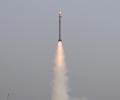
The MRSAM is amongst the most lethal surface-to-air missiles in service anywhere.

Another proposal of the army and the IAF for the procurement of 55 low level light weight radars was also cleared by the DAC for Rs 419 crore.

These unmanned aerial vehicles can fly at high speeds, detect intruders, do aerobatic maneuvers like loops, rolls, spins, and hammerheads effortlessly and communicate with each other intelligently.
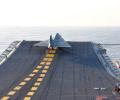
On Saturday, the aircraft made its first landing on the deck of INS Vikramaditya which was also a major milestone. Both the landing and take off by the aircraft put India among a select group of nations having the capability to design such a jet which can operate from an aircraft carrier.
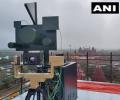
Prime Minister Narendra Modi had hoisted the national flag and addressed the nation from the ramparts of the Red Fort. He said that it was an occasion to remember freedom fighters who laid down their lives for the freedom of the country.

The Akash missile systems have over 96 percent indigenous components and the weapon can hit targets at a range of 25 km.
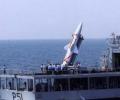
India on Thursday successfully test-fired its nuclear-capable Dhanush ballistic missile with a strike range of 350 km

Once deployed and operational, it will be used to support the satellite imagery requirements of various agencies within the government of Singapore.

Describing the trial as "fully successful", the sources said, the sophisticated missile travelled for 19 minutes and covered 4,900 km.

As an aerospace scientist, Kalam worked with India's two major space research organisations --DRDO and ISRO.

Describing the launch of the sophisticated missile as a complete success, ITR Director M V K V Prasad said all the mission parameters were met during the trial. "The missile was randomly chosen from the production stock and the launch activities were carried out by the specially formed Strategic Force Command and monitored by scientists of Defence Research and Development Organisation as part of training exercise," sources said.

The missile has a strike range of more than 2,000 km.

DRDO's Air Independent Propulsion system will allow Indian Navy submarines to operate for up to two weeks without having to surface to recharge its batteries.

Defence Research Development and Organisation Director General Avinash Chander on Saturday said that India's missile programme is purely aimed at peace in the country.

The company will supply the drug to major government as well as private hospitals across India, Dr Reddy's said in a regulatory filing.

The surface-to-surface tactical missile was blasted off from a canister strapped to the ground launcher from launch complex 4 of the Integrated Test Range in the APJ Abdul Kalam Island around 12.10 pm.

Dr Reddy's Laboratories on Friday soft-launched imported COVID-19 vaccine Sputnik V, with Deepak Sapra, a senior executive of the drug-maker, taking the first shot in Hyderabad.

The massive exercise code-named Iron First 2016 would involve the participation of 181 aircraft departing from multiple bases, and demonstrate a synchronized aerial ballet that would showcase its deadly combat capability over the entire spectrum of aerial operations.

India on Monday test-fired its nuclear-capable Agni-III ballistic missile with a strike range of more than 3,000 km as part of a user trial by the Army from Wheeler Island off Odisha coast, defence sources said.

In his address at the 41st Defence Research and Development Organisation Directors Conference, he also said the development of weaponry and other systems should be done keeping "future warfare" in mind.

With a combination of both physical and virtual exhibition, the 13th edition of the biennial international event at Air Force Station Yelahanka will be the world's first hybrid aerospace show.

Indian Army has deployed Pinaka and Smerch Multiple Rocket Launcher Systems (MRLS) at forward position near the China border to counter any threat arising across on the Line of Actual Control (LAC).
 © 2026 Rediff.com - Advertise with us - Disclaimer - Privacy Policy - Sitemap - Feedback - About us - Terms of use - Grievances